

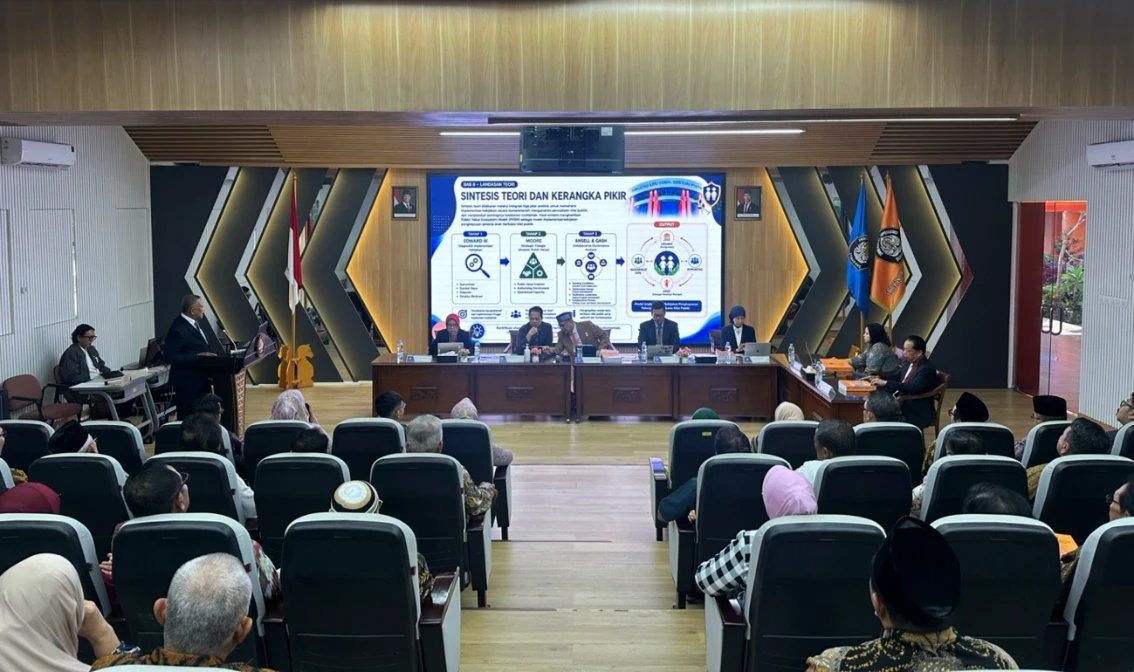
Semarang (30/6) – The estimated number of child laborers in Central Java, reaching 114,772 children, has sounded a loud alarm regarding the effectiveness of regional governance. Through a closed dissertation examination held on Friday (26/6), this policy was rigorously dissected in a study entitled “Public Value-Based Implementation Model for the Elimination of Child Labor in Central Java,” conducted by Gunarto, the 158th graduate of the Doctoral Program in Public Administration, FISIP, Universitas Diponegoro. Employing a qualitative approach with interpretive thematic analysis based on the models of Miles, Huberman, and Saldaña at the micro, meso, and macro levels, this research uncovered a critical finding: 13.3% of children returned to work post-intervention. This proves that the implementation of child protection policies remains formalistic, sectoral, fragmented, and fails to address the real root causes at the community level.
To dissect this deadlock, the study comprehensively integrated the implementation model of George Edward III, Mark Moore’s Strategic Triangle, Ansell & Gash’s collaborative governance, and Tony Bovaird’s co-production. The research successfully identified the phenomena of interlocking failure (mutually reinforcing policy failures), accidental collaborative governance, and a transitional governance ecosystem. As a theoretical and practical solution, a new model called the Public Value Ecosystem Model (PVEM) is proposed, extending Moore’s Strategic Triangle theory. PVEM introduces the new proposition that public value is emergent and can only be sustainable if all its elements—Public Value Creation, Authorizing Environment, Operational Capacity, Collaborative Governance, and Participatory Monitoring and Evaluation—are institutionalized simultaneously within an adaptive governance ecosystem.
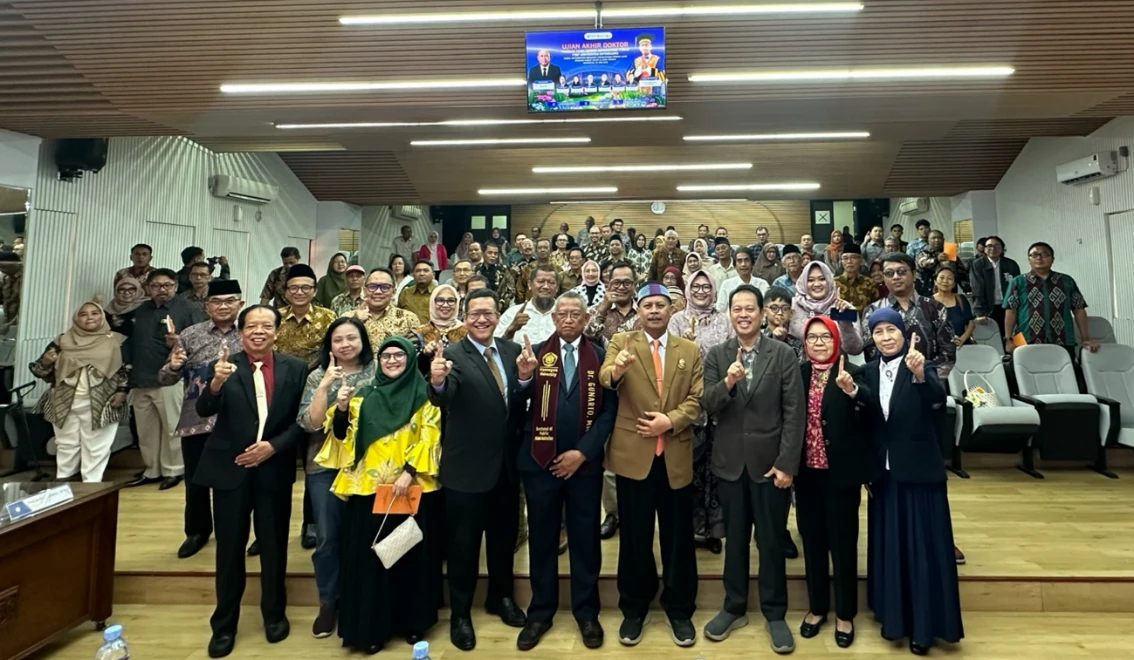
The depth of this research’s substance was born from the academic climate of the Doctoral Program in Public Administration at Universitas Diponegoro, which has been named the No. 1 Doctoral Program in Public Administration in Indonesia according to Edurank 2026. Under the direct leadership of the Dean of FISIP Undip, Dr. Drs. Teguh Yuwono, M.Pol. Admin., alongside the Head of the Study Program and Secretary of the Examination, Dr. Amni Zarkasyi Rahman, S.A.P., M.Si., this scientific achievement underscores the program’s reputation for producing thinkers capable of disrupting bureaucratic stagnation. The excellence of the learning ecosystem within Undip’s Public Administration Doctoral Program consistently guides doctoral students toward producing high-impact empirical research to address the structural failures of modern public administration.
Also in attendance were Titik Eko Rahayu, S.E., M.Si. (Deputy for Child Protection, KPPPA), Fakih Usman, S.E., M.Si. (Inspector, KPPPA Jakarta), M. Yulian Akbar, S.Sos., M.Si. (Regional Secretary of Pekalongan Regency), Budi Prakosa, S.T., M.T. (Head of Bappeda, Semarang City), and Affan Martadi, S.H., M.Si. (Head of Bappeda, Rembang Regency). The active involvement of high-ranking ministry officials and regional heads in this doctoral examination serves as empirical evidence that the research direction of the Doctoral Program in Public Administration at FISIP Undip is legally-formally and strategically recognized as a primary reference for the reformulation of national public policies.